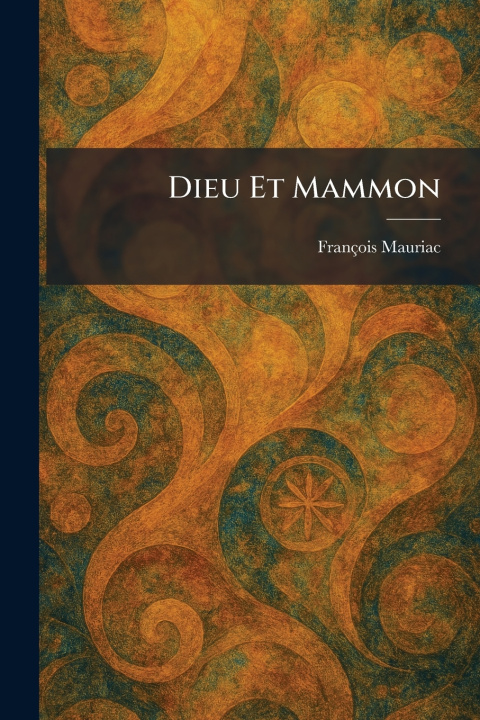
"Dieu et Mammon" est un essai introspectif et puissant de François Mauriac, figure majeure de la littérature catholique du XXe siècle. Dans cet ouvrage, l'auteur explore avec une sincérité désarmante le dilemme spirituel auquel est confronté l'écrivain croyant : comment concilier les exigences de la foi chrétienne avec la nécessité de peindre les réalités souvent sombres et passionnées de la nature humaine ? Mauriac s'interroge sur la responsabilité morale du romancier face à ses lecteurs et sur la possibilité d'une Åuvre littéraire qui serve la vérité sans succomber à la complaisance envers le mal.
À travers une réflexion autobiographique profonde, l'auteur répond aux critiques qui l'accusent de trop se complaire dans la description du péché. Ce texte essentiel offre une plongée fascinante dans la psychologie d'un créateur tiraillé entre son désir de servir Dieu et son irrésistible vocation littéraire. Véritable méditation sur la grâce, la tentation et l'art, "Dieu et Mammon" demeure un témoignage incontournable pour comprendre l'Åuvre de Mauriac et les débats intellectuels qui ont marqué son époque.
This work has been selected by scholars as being culturally important, and is part of the knowledge base of civilization as we know it. This work was reproduced from the original artifact, and remains as true to the original work as possible. Therefore, you may see the original copyright references, library stamps (as most of these works have been housed in our most important libraries around the world), and other notations in the work.
This work is in the public domain in the United States of America, and possibly other nations. Within the United States, you may freely copy and distribute this work, as no entity (individual or corporate) has a copyright on the body of the work.
As a reproduction of a historical artifact, this work may contain missing or blurred pages, poor pictures, errant marks, etc. Scholars believe, and we concur, that this work is important enough to be preserved, reproduced, and made generally available to the public. We appreciate your support of the preservation process, and thank you for being an important part of keeping this knowledge alive and relevant.