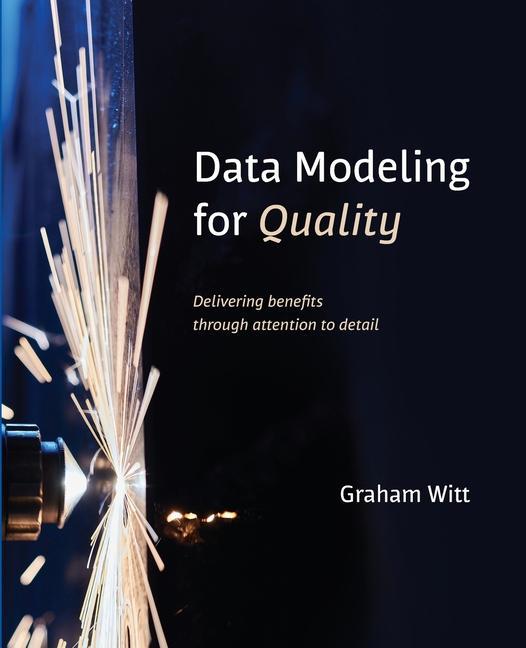
Książka Data Modeling for Quality Graham Witt

Data Modeling for Quality

Autor: Graham Witt
Język: Angielski
Oprawa: Miękka
Dostępność: Dostępna u dostawcy
Wysyłamy za 9-15 dni
155.28
This book is for all data modelers, data architects, and database designers―be they novices who want...

Informacje o książce

Autor
Język
Angielski
Oprawa
Książka - Miękka
Data wydania
2021
strony
304
EAN
9781634629133
ISBN
1634629132
Enbook ID
33585942
Waga
572
Wymiary
190 x 235 x 16

Pełny opis

This book is for all data modelers, data architects, and database designers―be they novices who want to learn what's involved in data modeling, or experienced modelers who want to brush up their skills.


A novice will not only gain an overview of data modeling, they will also learn how to follow the data modeling process, including the activities required for each step. The experienced practitioner will discover (or rediscover) techniques to ensure that data models accurately reflect business requirements. This book describes rigorous yet easily implemented approaches to:

  • modeling of business information requirements for review by business stakeholders before development of the logical data model
  • normalizing data, based on simple questions rather than the formal definitions which many modelers find intimidating
  • naming and defining concepts and attributes
  • modeling of time-variant data
  • documenting business rules governing both the real world and data
  • data modeling in an Agile project
  • managing data model change in any type of project
  •  transforming a business information model to a logical data model against which developers can code
  • implementing the logical data model in a traditional relational DBMS, an SQL:2003-compliant DBMS, an object-relational DBMS, or in XML.


Part 1 describes business information models in-depth, including:

  • the importance of modeling business information requirements before embarking on a logical data model
  • business concepts (entity classes)
  • attributes of business concepts
  • attribute classes as an alternative to DBMS data types
  • relationships between business concepts
  • time-variant data
  • generalization and specialization of business concepts
  • naming and defining the components of the business information model
  • business rules governing data, including a distinction between real-world rules and data rules.


Part 2 journeys from requirements to a working data resource, covering:

  • sourcing data requirements
  • developing the business information model
  • communicating it to business stakeholders for review, both as diagrams and verbally
  • managing data model change
  • transforming the business information model into a logical data model of stored data for implementation in a relational or object-relational DBMS
  • attribute value representation and data constraints (important but often overlooked)
  • modeling data vault, dimensional and XML data.

Możesz być zainteresowany

212.42
228.58
45.85

Ninja

John Man
70.48
446.37
309.58

Weird But True Animals

National Geographic Kids
37.76
148.56

Breathe

Sadiq Khan
48.77

ANAMCHARA ORACLE

SIONNACH SAORSA
79.82

March

Karol Birchfield
65.12

Voyagers

Wendy Mass
51.49
1 460.44
64.93
297.90
414.34
245.91

Klienci, którzy kupili tę książkę, kupili również

30.27

Registri Akashici

Melissa Smith
71.84

Olanda

Edmondo De Amicis
73.79

Mathe-Basics zum Studienbeginn

Albrecht Beutelspacher
116.92

Som mama

Kristína Farkašová
55.87