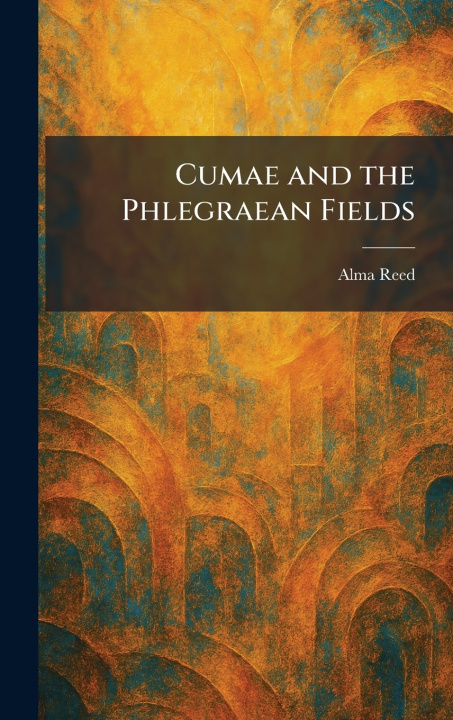
"Cumae and the Phlegraean Fields" offers a vivid and scholarly examination of one of the most historically significant regions in Italy. Written by Alma Reed, this work provides a detailed exploration of Cumae, recognized as the oldest Greek colony in the Western world, and its surrounding volcanic landscape known as the Phlegraean Fields or Campi Flegrei.
The book delves into the rich archaeological heritage of the area, bringing to life the legendary Cave of the Sibyl and the vital Roman naval installations at Misenum. Reed expertly balances historical narrative with descriptions of the unique topography and enduring ruins, guiding the reader through a landscape steeped in both mythology and ancient reality. From the architectural remnants of Greek temples to the volcanic wonders that inspired Virgil's Aeneid, this volume serves as an essential resource for those interested in classical archaeology and the expansion of Hellenic culture into the Italian peninsula.
Emphasizing the enduring legacy of the Roman Empire's presence in the Bay of Naples, "Cumae and the Phlegraean Fields" captures the mystical and historical allure of a region that has fascinated travelers and scholars for centuries. It remains a valuable contribution to the study of Mediterranean history and the preservation of classical antiquities.
This work has been selected by scholars as being culturally important, and is part of the knowledge base of civilization as we know it. This work was reproduced from the original artifact, and remains as true to the original work as possible. Therefore, you may see the original copyright references, library stamps (as most of these works have been housed in our most important libraries around the world), and other notations in the work.
This work is in the public domain in the United States of America, and possibly other nations. Within the United States, you may freely copy and distribute this work, as no entity (individual or corporate) has a copyright on the body of the work.
As a reproduction of a historical artifact, this work may contain missing or blurred pages, poor pictures, errant marks, etc. Scholars believe, and we concur, that this work is important enough to be preserved, reproduced, and made generally available to the public. We appreciate your support of the preservation process, and thank you for being an important part of keeping this knowledge alive and relevant.