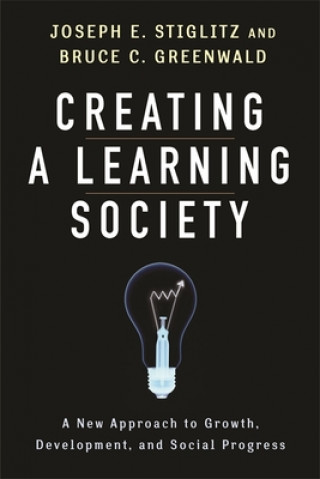
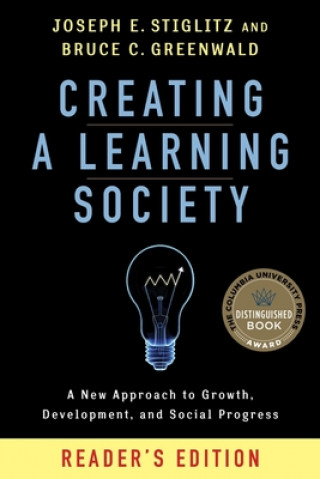
Książka Creating a Learning Society Joseph E. Stiglitz

Creating a Learning Society

Język: Angielski
Oprawa: Twarda
Dostępność: Dostępna u dostawcy
Wysyłamy za 9-15 dni
216.02
It has long been recognized that most standard of living increases are associated with advances in t...
Informacje o książce

Język
Angielski
Oprawa
Książka - Twarda
Data wydania
2014
strony
680
EAN
9780231152143
ISBN
0231152140
Enbook ID
02467718
Waga
1084
Wymiary
163 x 235 x 45

Pełny opis

It has long been recognized that most standard of living increases are associated with advances in technology, not the accumulation of capital. Yet it has also become clear that what truly separates developed from less developed countries is not just a gap in resources or output but a gap in knowledge. In fact, the pace at which developing countries grow is largely determined by the pace at which they close that gap. Therefore, how countries learn and become more productive is key to understanding how they grow and develop, especially over the long term. In Creating a Learning Society, Joseph E. Stiglitz and Bruce C. Greenwald spell out the implications of this insight for both economic theory and policy. Taking as a starting point Kenneth J. Arrow's 1962 paper "Learning by Doing," they explain why the production of knowledge differs from that of other goods and why market economies alone are typically not efficient in the production and transmission of knowledge. Closing knowledge gaps, or helping laggards learn, is central to growth and development. Combining technical economic analysis with accessible prose, Stiglitz and Greenwald provide new models of "endogenous growth," upending the received thinking about global policy and trade regimes. They show how well-designed government trade and industrial policies can help create a learning society; explain how poorly designed intellectual property regimes can retard learning; demonstrate how virtually every government policy has effects, both positive and negative, on learning; and they argue that policymakers need to be cognizant of these effects. They provocatively show why many standard policy prescriptions, especially associated with "neoliberal" doctrines focusing on static resource allocations, impede learning and explain why free trade may lead to stagnation, while broad based industrial protection and exchange rate interventions may bring benefits, not just to the industrial sector, but to the entire economy. The volume concludes with brief commentaries from Philippe Aghion and Michael Woodford, as well as from Nobel Laureates Kenneth J. Arrow and Robert M. Solow.

Możesz być zainteresowany

88.88

Freefall

Joseph E. Stiglitz
93.94

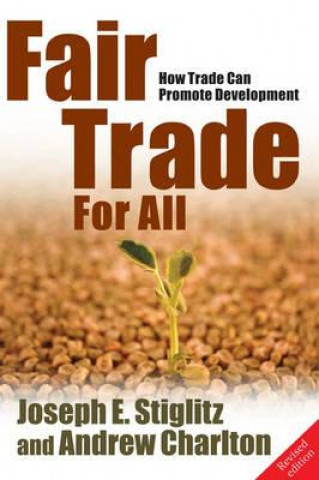
Fair Trade For All

Joseph E. Stiglitz
104.65

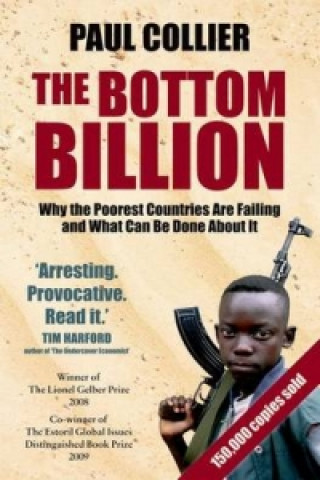
Bottom Billion

Paul Collier
59.47
95.98
140.18
83.91

Smith's Scrap Book of the Bible

William Preston Smith
165.01

Report of the Human Rights Committee

United Nations: Human Rights Committee
253.90
44.48

Blue Chameleon

Emily Gravett
64.93

Cure

Jo Marchant
48.77

Byron

STABLER
859.75
35.82
322.05

Kenilworth

Walter Scott
41.46
173.19

Arianna's First 5K

Mrs Keshia a Dickason
76.12
64.93
57.24

Klienci, którzy kupili tę książkę, kupili również

64.93
209.02

Why Nations Fail

Daron Acemoglu
50.13

Soumrak homo economicus

Tomáš Sedláček
18.98

Slepá mapa

Alena Mornštajnová
59.47

S Bohem a fašisty

Karlheinz Deschner
55.19

Klub nerozbitných detí

Slávka Kubíková
62.49

Kafkonomie

Tomáš Sedláček
23.26

Zrada vzdělanců

Julien Benda
51.79

Homo Deus

Yuval Noah Harari
97.74

Proti tyranům

Jan Jesenský
33.28
52.47
808.05

Aiden

Melanie Moreland
55.19
101.63

Gute Idee!

Herbert Puchta
57.72
36.89
129.18