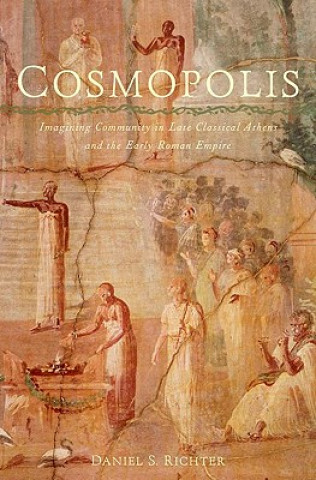
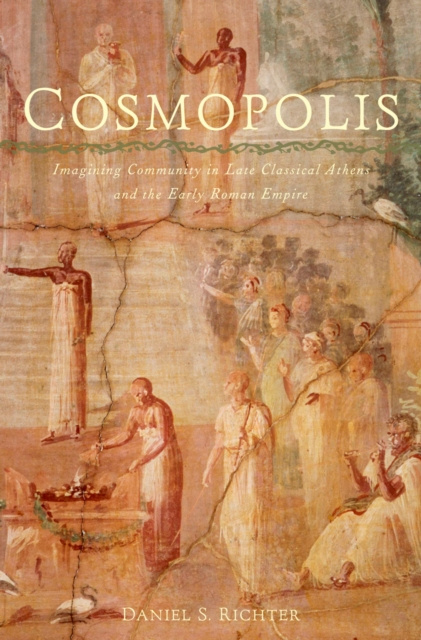
Książka Cosmopolis Daniel S. Richter

Cosmopolis

Imagining Community in Late Classical Athens and the Early Roman Empire

Język: Angielski
Oprawa: Twarda
Dostępność: Dostępna u dostawcy
Wysyłamy za 10-18 dni
479.52
This is a book about the ways in which various intellectuals in the post-classical Mediterranean ima...
Informacje o książce

Język
Angielski
Oprawa
Książka - Twarda
Data wydania
2011
strony
304
EAN
9780199772681
ISBN
0199772681
Enbook ID
04535858
Waga
584
Wymiary
165 x 239 x 26

Pełny opis

This is a book about the ways in which various intellectuals in the post-classical Mediterranean imagined the human community as a unified, homogenous whole composed of a diversity of parts. More specifically, it explores how authors of the second century CE adopted and adapted a particular ethnic and cultural discourse that had been elaborated by late fifth- and fourth-century BCE Athenian intellectuals. At the center of this book is a series of contests over the meaning of lineage and descent and the extent to which the political community is or ought to be coterminous with what we might call a biologically homogenous collectivity. The study suggests that early imperial intellectuals found in late classical and early Hellenistic thought a way of accommodating the claims of both ethnicity and culture in a single discourse of communal identity. The idea of the unity of humankind evolved in the fifth and fourth centuries as a response to and an engine for the creation of a rapidly shrinking and increasingly integrated oikoumene . The increased presence of outsiders in the classical city-state as well as the creation of sources of authority that lay outside of the polis destabilized the idea of the polis as a kin group (natio). Beginning in the early fourth century and gaining great momentum in the wake of Alexander's conquest of the East, traditional dichotomies such as Greek and barbarian lost much of their explanatory power. In the second-century CE, by contrast, the empire of the Romans imposed a political space that was imagined by many to be coterminous with the oikoumene itself. One of the central claims of this study is that the forms of cosmopolitan and ecumenical thought that emerged in both moments did so as responses to the idea that the natio - the kin group - is (or ought to be) the basis for any human collectivity.

Możesz być zainteresowany

Cosmopolis

Daniel S. Richter
414.92

Making Men

Maud W. Gleason
187.44

Race: Antiquity and Its Legacy

Denise Eileen McCoskey
122.94
111.35

Klienci, którzy kupili tę książkę, kupili również