Książka Command and Control: The Sociotechnical Perspective Paul M. Salmon

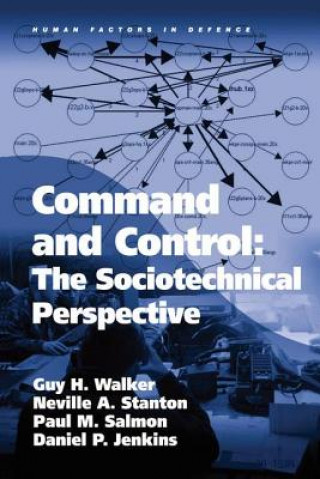
Command and Control: The Sociotechnical Perspective

Język: Angielski
Oprawa: Twarda
Dostępność: Dostępna u dostawcy
Wysyłamy za 9-15 dni
968.63
Military command and control is not merely evolving, it is co-evolving. Technology is creating new o...


Informacje o książce

Język
Angielski
Oprawa
Książka - Twarda
Data wydania
2009
strony
216
EAN
9780754672654
ISBN
0754672654
Enbook ID
04681449
Waga
538
Wymiary
161 x 236 x 19

Pełny opis

Military command and control is not merely evolving, it is co-evolving. Technology is creating new opportunities for different types of command and control, and new types of command and control are creating new aspirations for technology. The question is how to manage this process, how to achieve a jointly optimised blend of socio and technical and create the kind of agility and self-synchronization that modern forms of command and control promise. The answer put forward in this book is to re-visit sociotechnical systems theory. In doing so, the problems of 21st century command and control can be approached from an alternative, multi-disciplinary and above all human-centred perspective. Human factors (HF) is also co-evolving. The traditional conception of the field is to serve as a conduit for knowledge between engineering and psychology yet 21st century command and control presents an altogether different challenge. Viewing military command and control through the lens of sociotechnical theory forces us to confront difficult questions about the non-linear nature of people and technology: technology is changing, from platform centric to network centric; the interaction with that technology is changing, from prescribed to exploratory; and complexity is increasing, from behaviour that is linear to that which is emergent. The various chapters look at this transition and draw out ways in which sociotechnical systems theory can help to understand it. The sociotechnical perspective reveals itself as part of a conceptual toolkit through which military command and control can be transitioned, from notions of bureaucratic, hierarchical ways of operating to the devolved, agile, self-synchronising behaviour promised by modern forms of command and control like Network Enabled Capability (NEC). Sociotechnical system theory brings with it a sixty year legacy of practical application and this real-world grounding in business process re-engineering underlies the entire book. An attempt has been made to bring a set of sometimes abstract (but no less useful) principles down to the level of easy examples, design principles, evaluation criteria and actionable models. All of these are based on an extensive review of the current state of the art, new sociotechnical/NEC studies conducted by the authors, and insights derived from field studies of real-life command and control. Time and again, what emerges is a realisation that the most agile, self-synchronising component of all in command and control settings is the human.

Możesz być zainteresowany

84.51
890.75

Divine Rivals

Rebecca Ross
50.25

Bawdy and Soul

Frank Erik Pointner
158.78

Babylon's Ashes

James S. A. Corey
95.34

West Point Military Academy

Seneca Ray Stoddard
51.91

The Cult of Me

Michael Brookes
42.54

The X Files Encyclopedia

Richard B Gosnell
135.26

African Love Story

Daphne Sheldrick
57.57

Liberal Living Upon Narrow Means

Christine Terhune Herrick
138.28
156.53
196.74
60.11

Next Cmo

Scott Todaro
75.92

Klienci, którzy kupili tę książkę, kupili również

Painted Crime

Stefano Martino
96.71
150.97
64.01
216.85