Książka Colonial Counterpoint D. R. M. Irving

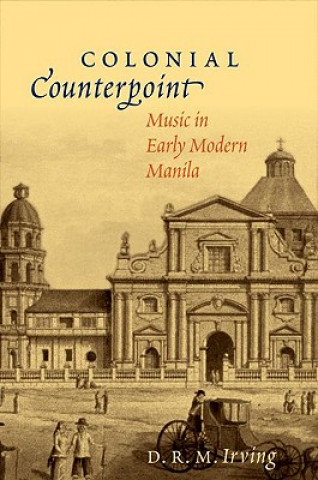
Colonial Counterpoint

Music in Early Modern Manila

Język: Angielski
Oprawa: Twarda
Dostępność: Dostępna u dostawcy
Wysyłamy za 10-18 dni
185.00
In this groundbreaking study, D. R. M. Irving reconnects the Philippines to current musicological di...


Informacje o książce

Język
Angielski
Oprawa
Książka - Twarda
Data wydania
2010
strony
408
EAN
9780195378269
ISBN
0195378261
Enbook ID
04518748
Waga
692
Wymiary
163 x 238 x 33

Pełny opis

In this groundbreaking study, D. R. M. Irving reconnects the Philippines to current musicological discourse on the early modern Hispanic world. For some two and a half centuries, the Philippine Islands were firmly interlinked to Latin America and Spain through transoceanic relationships of politics, religion, trade, and culture. The city of Manila, founded in 1571, represented a vital intercultural nexus and a significant conduit for the regional diffusion of Western music. Within its ethnically diverse society, imported and local musics played a crucial role in the establishment of ecclesiastical hierarchies in the Philippines and in propelling the work of Roman Catholic missionaries in neighboring territories. Manila's religious institutions resounded with sumptuous vocal and instrumental performances, while an annual calendar of festivities brought together many musical traditions of the indigenous and immigrant populations in complex forms of artistic interaction and opposition. Multiple styles and genres coexisted according to strict regulations enforced by state and ecclesiastical authorities, and Irving uses the metaphors of European counterpoint and enharmony to critique musical practices within the colonial milieu. He argues that the introduction and institutionalization of counterpoint acted as a powerful agent of colonialism throughout the Philippine Archipelago, and that contrapuntal structures were reflected in the social and cultural reorganization of Filipino communities under Spanish rule. He also contends that the active appropriation of music and dance by the indigenous population constituted a significant contribution to the process of hispanization. Sustained "enharmonic engagement" between Filipinos and Spaniards led to the synthesis of hybrid, syncretic genres and the emergence of performance styles that could contest and subvert hegemony. Throwing new light on a virtually unknown area of music history, this book contributes to current understanding of the globalization of music, and repositions the Philippines at the frontiers of research into early modern intercultural exchange.

Możesz być zainteresowany

Rarefied Gas Dynamics

Carlo (Politecnico di Milano) Cercignani
605.88

Mila Azul

Isabella Catalina
87.09

The Witch King

H. E. Edgmon
55.91

Official A.A.U. Basketball Guide

Amateur Athletic Union of the United Sta
88.45
79.78

Eleeza

Eliza Ivanova
112.22
603.05

Genesis of Growth

YVES BEAUVAIS
68.19

Vestal

Margaret Hadsell
101.21
28.73
423.79

Naked

David Sedaris
81.63

Lost Modernities

Alexander Woodside
202.05
222.61

Epistemology

Richard Fumerton
418.53
339.81

Maternities

Robyn Longhurst
296.75

Klienci, którzy kupili tę książkę, kupili również

La Toison d'or

Théophile Gautier
39.64

Audi et les 24 heures du mans

MARTINE HAMM - DANIE
148.95

Inmigración ilegal

Andrés Santana Muñoz
271.22
37.89
74.52