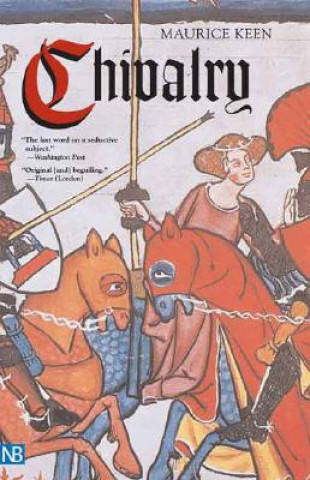
Książka Chivalry Maurice Keen

Chivalry

Autor: Maurice Keen
Język: Angielski
Oprawa: Miękka
Dostępność: Dostępna u dostawcy
Wysyłamy za 14-20 dni
79.14
In this book Maurice Keen examines the significance of chivalry as a secular social ideal in the per...
Informacje o książce

Autor
Język
Angielski
Oprawa
Książka - Miękka
Data wydania
2005
strony
352
EAN
9780300107678
ISBN
0300107676
Enbook ID
04050245
Waga
348
Wymiary
127 x 196 x 24

Pełny opis

In this book Maurice Keen examines the significance of chivalry as a secular social ideal in the period from c. 1100 to c. 1500, and finds that historians have exaggerated both chivalry's early Christian dedication and its later secular decadence, and that it may be better described as an ethos in which martial, aristocratic and Christian elements were fused together. Keen first discusses the secular origins of chivalry and stresses the importance of the development of new cavalry tactics in the late eleventh century, which set apart the knights - mounted warriors - as a separate and privileged group. The launching of the crusades sharpened existing ideas about their Christian role at about the same time, and rituals for making new knights gave definition to chivalry as an aristocratic order. The appearance in the twelfth century of a secular literature of knighthood did something more, endowing chivalry with an historical mythology of its own. The stories of Charlemagne and Arthur furnished a store of prestigious models of chivalrous values in action. In the same way, heraldry offered a means whereby both the class pride and the ideals of knighthood could be symbolically expressed, and the heralds, as experts in its history, literature and rituals, became a kind of secular priesthood of chivalry. Their learning helped to render the chivalry of the late middle ages ornate and often extravagant - a development which has led many historians to categorise it as decadent. Keen argues, however, that the attention lavished on externals in the fourteenth and fifteenth centuries, and exemplified in the pageantry of tournaments and the ceremonials of such famous secular orders of chivalry as the Garter and the Golden Fleece, was not just empty show: it was rather an attempt to give expression, in a vivid and evocative manner, to the values and virtues of chivalry. The cult of honour, which seeks to give merit and loyal service their due reward in reputation and social respect, was at the heart of the chivalric ideal. An idea of nobility which emphasised the social and moral obligations that high status and a privileged way of life impose was the most important legacy of chivalry to later times, and it had a profound influence in consequence on the political mentality of the aristocracies of early modern Europe.

Możesz być zainteresowany

104.09
523.59

New Knighthood

Malcolm Barber
87.79
257.91

Marcel Proust

William C Carter
221.82

First Crusade

August C Krey
146.95
51.00
47.52
146.85

Locklands

ROBERT JACKSON BENNE
67.20

DK Peru

DK Travel
76.05

Neurology Secrets

Joseph S. Kass
248.56
38.57
66.31

Nova

Rebecca Yarros
42.15

Klienci, którzy kupili tę książkę, kupili również

65.41

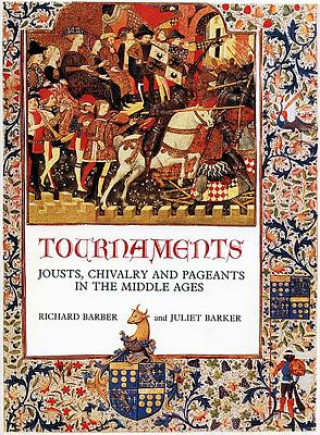
Tournaments

Richard Barber
128.75

Norman Conquest

Marc Morris
58.46
78.04

French Chivalry

Sidney Painter
90.77

Anglo-Saxon World

Nicholas Higham
103.99
112.94
410.93

Inheritance of Rome

Chris Wickham
81.72
62.13

The Righteous Mind

Jonathan Haidt
67.20
76.05
83.51

What Is Mathematics?

Richard Courant
97.13

Cnut the Great

Timothy Bolton
102.01
69.19
278.59

Byzantium

Judith Herrin
67.20
67.20
292.41