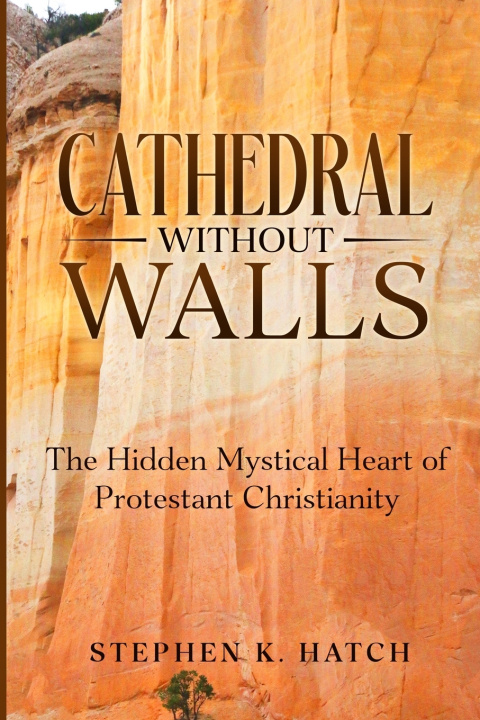
Książka Cathedral Without Walls Stephen K Hatch

Cathedral Without Walls

The Hidden Mystical Heart of Protestant Christianity

Język: Angielski
Oprawa: Miękka
Wydawca: Stephen K. Hatch
Dostępność: Zapowiedź
Wydanie 10. 07. 2026
76.75
Why do millions of people today reach for a cell phone, a drug, or endless scrolling to escape the t...

Informacje o książce

Język
Angielski
Oprawa
Książka - Miękka
Data wydania
2026
strony
288
EAN
9798996537228
Enbook ID
53241512
Waga
390
Wymiary
152 x 229 x 16

Pełny opis

Why do millions of people today reach for a cell phone, a drug, or endless scrolling to escape the terror of being trapped inside themselves in what feels like a leaden ball? Do they realize that people five hundred years ago already experienced this same claustrophobic feeling - perhaps even more intensely?

Cathedral Without Walls uncovers a hidden mystical tradition running through the heart of Protestant Christianity. Its central discovery is disarmingly simple: we cannot know ourselves by staring inward. We can only find ourselves reflected in a mirror - in Christ, and just as powerfully in Nature.

This book traces a surprising lineage from John Calvin's conviction that "Nature is God's mirror" to the wilderness mysticism of Emerson, Thoreau, and Muir, revealing that the movement's deepest roots are not secular but Calvinist. It uncovers the radical claim of the Contemplative Spirituals that "everyone can be pious by himself, wherever he is" as a source of the Spiritual But Not Religious movement, and follows that conviction into the Quakers' silent meetings, Jacob Boehme's vision of the individual as a mirror for God's self-awareness, and the startling discovery that evangelical Christianity harbors a hidden radical mystical tradition.

This book offers a way through the suffering that drives so many toward psychedelics and compulsive distraction. Drawing on Boehme's vision of inner suffering transmuted into light, it shows how the contemplative tradition navigates this terror by turning to the mirror of Nature. Along the way, it reframes Christ as not a victim punished for human sin, but as the living presence who indwells our true Self, and recovers Sophia, the forgotten sacred feminine of Boehme's theology. Both the solitary hiker who finds God on a mountain trail and the seeker who has never set foot in a church belong to an inheritance far richer than they ever imagined.