For most of software's history, there was a wall - and you were either on the side that could build apps or the side that could only wish for them. The wall was code. Now it has a door.
A new generation of AI tools lets you build real, working software by describing what you want in plain language and refining it through conversation. Not a mockup, not a configured template - an actual app, with a real interface, a real database, and real behavior, deployed to a real URL other people can use. People who have never written a line of code are building the tools they need in an afternoon. The popular name for it is vibe coding: you describe the vibe, the AI writes the code, and you steer by reacting to what it makes.
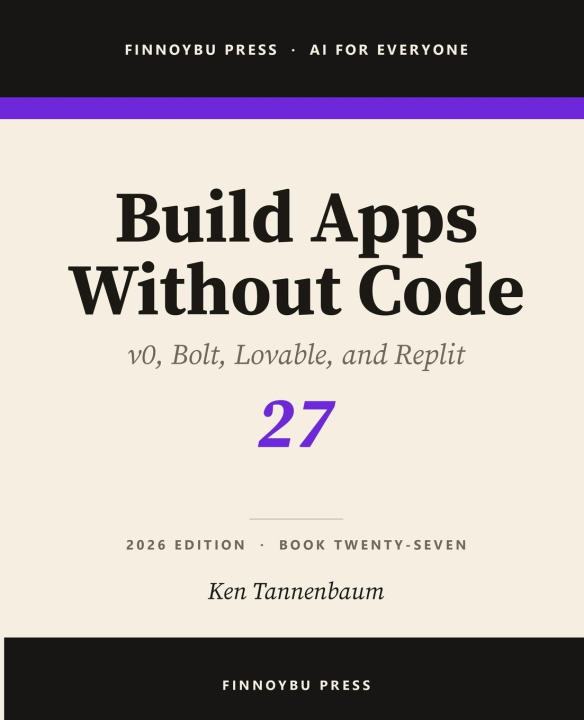
Build Apps Without Code is a practical guide to the four leading AI app builders:
- v0 (Vercel) - polished, production-grade interfaces tied to fast deployment
- Bolt (StackBlitz) - full-stack apps in a real in-browser dev environment, with the most portable output
- Lovable - a complete product with a working backend, out of the box, for non-coders
- Replit - a real cloud dev environment with hosting and a database included; closest to "describe it and get a deployed, running app"
This book is enthusiastic about the shift - and honest about it, which the hype usually isn't. The same tool that builds a polished app in an hour can build one that quietly mishandles your users' data, exposes secrets, or works in the demo and breaks on the tenth real user. Making software got radically easier. Knowing whether the software is good, safe, and ready did not - and as building gets easy, that judgment becomes the whole job.
Inside, you'll learn how to:
- Understand what these tools really are - and what you genuinely can and can't build with them
- Choose among the four, and build your first app in each
- Add the real-world parts: data and backends, accounts and login, outside services, and design polish
- Ship to a live URL with a custom domain - and understand the two meters, building vs. running, before the bill surprises you
- Read the honest limits: security and your users' data, scaling and lock-in, and when you still need a developer
- Tell a prototype from production - and know which one you've actually built
One warning you'll hear more than once: an app that looks finished is not the same as an app that is safe. The failure mode is invisible by design - the login screen still appears, the data still saves - so you bring the suspicion with you from the first build.
Who it's for: non-technical people with a specific need and no developer to build it; founders and product people who want to prototype an idea into something real in an afternoon; and developers who want to move faster, with a clear-eyed read on where the generated code falls short.
Accurate as of mid-2026 - the fastest-moving corner of a fast-moving field - with pricing and model names flagged as snapshots. Part of the Finnoybu Press AI for Everyone series.
The door in the wall is real. Build boldly - and ship responsibly.