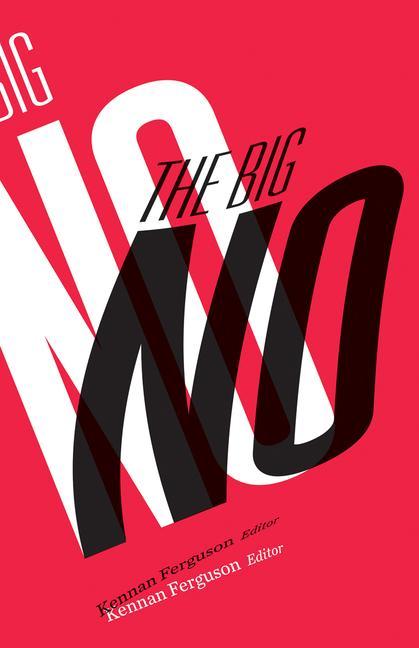
What it means to celebrate the potential and the power of no What does it mean to refuse? To not participate, to not build a better world, to not come up with a plan? To just say “no”? Against the ubiquitous demands for positive solutions, action-oriented policies, and optimistic compromises, The Big No refuses to play. Here leading scholars traverse the wide range of political action when “no” is in the picture, analyzing topics such as collective action, antisocialism, empirical science, the negative and the affirmative in Deleuze and Derrida, the “real” and the “clone,” Native sovereignty, and Afropessimism. In his introduction, Kennan Ferguson sums up the concept of the “Big No,” arguing for its political importance. Whatever its form-he identifies various strains-the Big No offers power against systems of oppression. Joshua Clover argues for the importance of Marx and Fanon in understanding how people are alienated and subjugated. Theodore Martin explores the attractions of antisociality in literature and life, citing such novelists as Patricia Highsmith and Richard Wright. FranÇois Laruelle differentiates nonphilosophy from other forms of French critical theory. Katerina Kolozova applies this insight to the nature of reality itself, arguing that the confusion of thought and reality leads to manipulation, automation, and alienation. Using poetry and autobiography, Frank Wilderson shows how Black people-their bodies and being-are displaced in politics, replaced and erased by the subjectivities of violence, suffering, and absence. Andrew Culp connects these themes of negativity, comparing and contrasting the refusals of antiphilosophy and Afropessimism. Thinking critically usually demands alternatives: how would you fix things? But, as The Big No shows, being absolutely critical-declining the demands of world-building-is one necessary response to wrong, to evil. It serves as a powerful reminder that the presumption of political action is always positive. Contributors: Joshua Clover, U of California Davis and U of Copenhagen; Andrew Culp, California Institute of the Arts; Katerina Kolozova, Institute of Social Sciences and Humanities Skopje; Theodore Martin, U of California, Irvine; Anthony Paul Smith, La Salle U; Frank B. Wilderson III, U of California, Irvine.