The Cold War is back in the news. So is history, in the sense of past geopolitical confrontations that for a span of a few decades were thought to be largely decoupled from present-day political developments. Of course, such reflexive reactions lack nuance and, until the Russian invasion of Ukraine in February 2022, tended to refer more to tensions between the United States and China. We should neither see Russia's aggressive war in Ukraine immediately as part of a new cold war-though it could certainly become one of its foundation pieces-nor define history simply in terms of warfare and conflict. Yet such history has great appeal in efforts to understand the dizzying and depressing events of recent years. For example, correspondents and commentators have likened the delivery of weapons systems, protective gear, and humanitarian aid to a beleaguered Ukraine to the Berlin Airlift of 1948-49. But relying on history as a guide may mislead as much as enlighten.
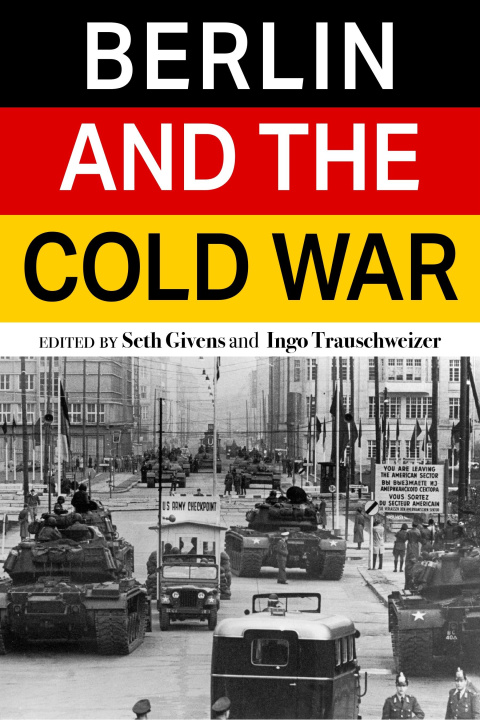
No city symbolizes the Cold War quite as Berlin does. When we think of the Cold War and of Berlin, we tend to emphasize the crises-the 1948-49 blockade and airlift, perhaps the 1953 East German workers' uprising, surely the 1958-61 crisis, during which the Berlin Wall was built-and the climactic ending of the Cold War in Europe when the wall came down. Berlin may conjure up iconic moments and tropes, from a statement attributed to Nikita Khrushchev in 1963 that Berlin was "the testicles of the West," to John F. Kennedy's insistence that all free men had to be invested in the defense of Berlin, to Ronald Reagan's exhortation to Mikhail Gorbachev to "tear down this wall." For American presidents (or presidential hopefuls), Berlin and the Brandenburg Gate have remained powerful images, even in the twenty-first century. A presence in Berlin signals strong leadership in the West, even though the proximate reasons why the West, as a political construct, emerged in the first place may be gone. In that sense, Berlin also stands for overcoming the past: first, West Berlin as the counterpoint not only to eastern communism but also to defeated fascism, and second, the new Berlin as the capital of a unified Germany and as a symbol that the West has won.