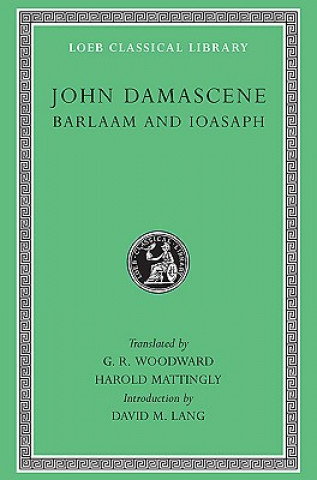
Książka Barlaam and Ioasaph St.John Damascene

Barlaam and Ioasaph

Język: Angielski
Oprawa: Twarda
Dostępność: Dostępna u dostawcy
Wysyłamy za 14-20 dni
141.68
One of the best known examples of the hagiographic novel, this is the tale of an Indian prince who b...

Informacje o książce

Język
Angielski
Oprawa
Książka - Twarda
strony
688
EAN
9780674990388
ISBN
0674990382
Enbook ID
04636680
Waga
470
Wymiary
168 x 121 x 35

Pełny opis

One of the best known examples of the hagiographic novel, this is the tale of an Indian prince who becomes aware of the world's miseries and is converted to Christianity by the monk Barlaam. Barlaam and Josaphat (Ioasaph) were believed to have re-converted India after her lapse from conversion to Christianity, and they were numbered among the Christian saints. Centuries ago likenesses were noticed between the life of Josaphat and the life of the Buddha; the resemblances are in incidents, doctrine, and philosophy, and Barlaam's rules of abstinence resemble the Buddhist monk's. But not till the mid-nineteenth century was it recognised that, in Josaphat, the Buddha had been venerated as a Christian saint for about a thousand years. The origin of the story of Barlaam and Ioasaphwhich in itself has little peculiar to Buddhismappears to be a Manichaean tract produced in Central Asia. It was welcomed by the Arabs and by the Georgians. The Greek romance of Barlaam appears separately first in the 11th century. Most of the Greek manuscripts attribute the story to John the Monk, and it is only some later scribes who identify this John with John Damascene (ca. 676749). There is strong evidence in Latin and Georgian as well as Greek that it was the Georgian Euthymius (who died in 1028) who caused the story to be translated from Georgian into Greek, the whole being reshaped and supplemented. The Greek romance soon spread throughout Christendom, and was translated into Latin, Old Slavonic, Armenian, and Arabic. An English version (from Latin) was used by Shakespeare in his caskets scene in "The Merchant of Venice." David M. Lang's Introduction traces parallels between the Buddhist and Christian legends, discusses the importance of Arabic versions, and notes influences of the Manichaean creed.

Możesz być zainteresowany

54.49

All About Us

Philipp Keel
54.10

Computer Vision

Information Reso Management Association
1 626.65
437.91
66.74
445.51

Fairy Tales

The Brothers Grimm
56.37
39.98

Enemy at the Gate

Andrew Wheatcroft
68.91

Managing Diversity

Michalle E. Mor Barak
453.61

Seven Sisters

BUCKLEY VERONICA
112.16
1 153.38
366.62

Elizabeth I

Clark Hulse
117.20

Klienci, którzy kupili tę książkę, kupili również

Stopy v písku

Martin Palouš
89.75
182.46
186.81

Le jeu pathologique

Marie Grall-Bronnec
212.28
35.64

Rêver - Collector

Franck Thilliez
55.29