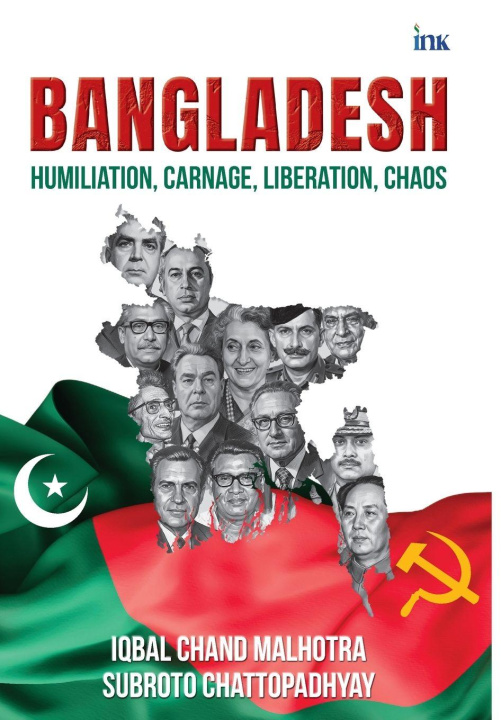
| The roots of the conflict between East and West Pakistan go back to the traumatic partition | of the subcontinent in 1947. Pakistan was united by religion but divided by language and | culture-fault lines that soon metastasized into repeated humiliations and injustices. As | protests erupted, the Pakistan Army unleashed a brutal campaign to silence dissent: three | million people were killed, over 200,000 women were subjected to sexual violence, and ten | million refugees fled to India, all for demanding autonomy. | The silence of the international community was deafening. The US and China, openly tilting | towards Pakistan, did nothing to halt the unfolding genocide. The subcontinent had become | the epicentre of a superpower contest. | India stood isolated. | Impoverished and destabilized by left-wing insurgency yet morally steadfast, Indira Gandhi's | India-working in close coordination with Tajuddin Ahmad, Bangladesh's first PM, and the | resolute Mukti Bahini-waged a covert struggle for nine months. This culminated in a swift | thirteen-day military campaign that broke the Pakistan Army, resulted in the capture of | 93,000 prisoners of war, and delivered Bangladesh in one of history's fastest and most | decisive liberations. | All arms of the Indian state and Bangladesh's government-in-exile had worked in perfect | unison to deliver a glorious victory, yet peace proved fragile. Chaos followed almost | immediately after independence, and nearly all the central figures of the struggle were | eventually assassinated in a spiral of senseless violence. | Half a century later, as the same hatreds of language, identity, and faith erupt again, the | ghosts of 1971 return-not as memory, but as warning. |