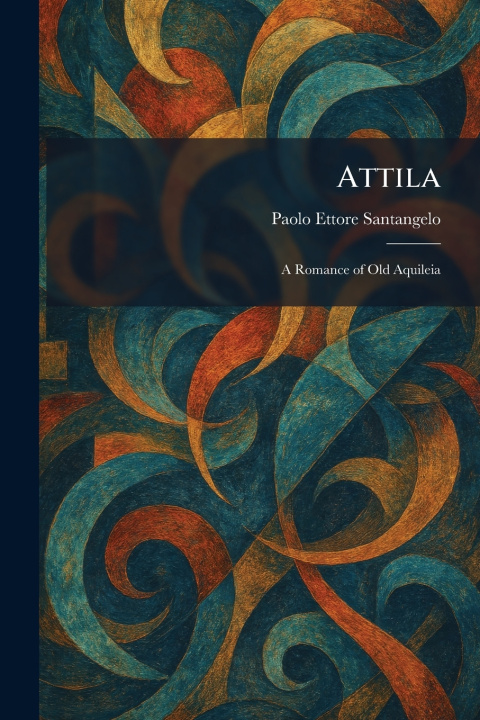
"Attila, a Romance of Old Aquileia" is a sweeping historical novel set against the backdrop of the 5th-century decline of the Roman Empire. The story captures the dramatic and turbulent era when Attila the Hun, known as the Scourge of God, led his nomadic forces into the heart of Italy. At the center of the narrative is the legendary city of Aquileia, a crucial Roman stronghold facing imminent destruction during the Hunnish invasion.
Paolo Ettore Santangelo weaves a tale of passion and conflict, exploring the collision between the fading grandeur of Roman civilization and the raw power of the invading tribes. Through vivid characterizations and a focus on the romantic tensions of the era, the work portrays the human cost of war and the enduring spirit of those caught in the path of history's most feared conquerors. As a work of historical fiction, it offers a compelling glimpse into the legends surrounding Attila and the tragic fate of one of the ancient world's most significant cities.
This work has been selected by scholars as being culturally important, and is part of the knowledge base of civilization as we know it. This work was reproduced from the original artifact, and remains as true to the original work as possible. Therefore, you may see the original copyright references, library stamps (as most of these works have been housed in our most important libraries around the world), and other notations in the work.
This work is in the public domain in the United States of America, and possibly other nations. Within the United States, you may freely copy and distribute this work, as no entity (individual or corporate) has a copyright on the body of the work.
As a reproduction of a historical artifact, this work may contain missing or blurred pages, poor pictures, errant marks, etc. Scholars believe, and we concur, that this work is important enough to be preserved, reproduced, and made generally available to the public. We appreciate your support of the preservation process, and thank you for being an important part of keeping this knowledge alive and relevant.