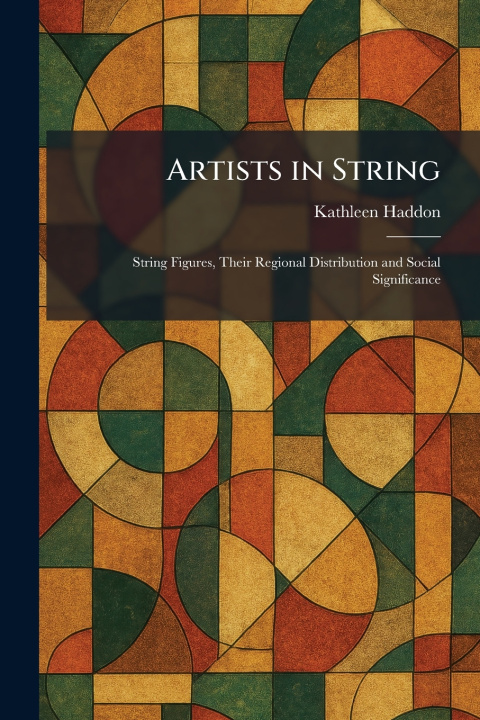
"Artists in String: String Figures, Their Regional Distribution and Social Significance" is a fascinating anthropological exploration into the intricate world of string figures, commonly known as cat's cradle. This work examines how these complex patterns are far more than mere games; they represent a unique form of artistic expression and cultural communication found across the globe.
The book investigates the regional distribution of string figures, tracing their presence among various indigenous peoples from the Arctic to the Pacific Islands and Africa. Author Kathleen Haddon provides detailed descriptions of the techniques used and analyzes the social significance of these figures within their respective communities. She highlights how the patterns often represent local mythology, everyday objects, or natural phenomena, serving as a vital window into the collective imagination and storytelling traditions of different societies.
Combining scientific observation with a deep appreciation for folk art, "Artists in String" remains an essential resource for anthropologists, folklorists, and those interested in the history of games and traditional crafts. It celebrates the universal human impulse for creativity and the sophisticated cultural narratives that can emerge from a simple loop of string.
This work has been selected by scholars as being culturally important, and is part of the knowledge base of civilization as we know it. This work was reproduced from the original artifact, and remains as true to the original work as possible. Therefore, you may see the original copyright references, library stamps (as most of these works have been housed in our most important libraries around the world), and other notations in the work.
This work is in the public domain in the United States of America, and possibly other nations. Within the United States, you may freely copy and distribute this work, as no entity (individual or corporate) has a copyright on the body of the work.
As a reproduction of a historical artifact, this work may contain missing or blurred pages, poor pictures, errant marks, etc. Scholars believe, and we concur, that this work is important enough to be preserved, reproduced, and made generally available to the public. We appreciate your support of the preservation process, and thank you for being an important part of keeping this knowledge alive and relevant.