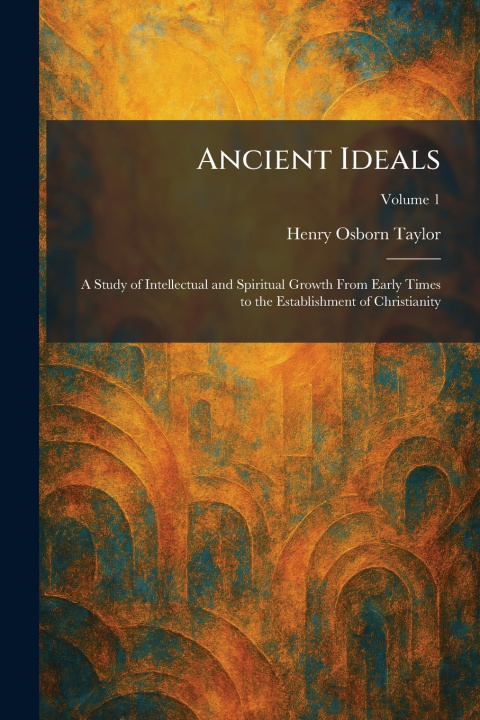
"Ancient Ideals" offers a profound examination of the intellectual and spiritual evolution of human civilization, tracing the development of thought from the earliest records of antiquity to the establishment of Christianity. Henry Osborn Taylor explores the core values and beliefs that animated the great cultures of the ancient world, including the civilizations of Egypt, Babylonia, India, and China, with a particular emphasis on the monumental contributions of the Greeks.
This first volume delves into the diverse ways in which ancient peoples sought to understand their place in the universe and the nature of the divine. By analyzing their literature, art, and philosophy, Taylor illuminates the gradual unfolding of human consciousness and the emergence of moral and spiritual concepts that would eventually form the bedrock of Western thought. The work focuses on the human spirit's quest for excellence and the various "ideals" that guided different societies toward intellectual maturity.
As a significant study in the history of ideas, "Ancient Ideals" remains an essential resource for those interested in the philosophical and religious roots of modern culture. Taylor's narrative skillfully connects the historical realities of ancient life with the enduring aspirations of the human mind, providing a comprehensive overview of the path toward spiritual enlightenment.
This work has been selected by scholars as being culturally important, and is part of the knowledge base of civilization as we know it. This work was reproduced from the original artifact, and remains as true to the original work as possible. Therefore, you may see the original copyright references, library stamps (as most of these works have been housed in our most important libraries around the world), and other notations in the work.
This work is in the public domain in the United States of America, and possibly other nations. Within the United States, you may freely copy and distribute this work, as no entity (individual or corporate) has a copyright on the body of the work.
As a reproduction of a historical artifact, this work may contain missing or blurred pages, poor pictures, errant marks, etc. Scholars believe, and we concur, that this work is important enough to be preserved, reproduced, and made generally available to the public. We appreciate your support of the preservation process, and thank you for being an important part of keeping this knowledge alive and relevant.