Książka After Eden Kirkpatrick Sale

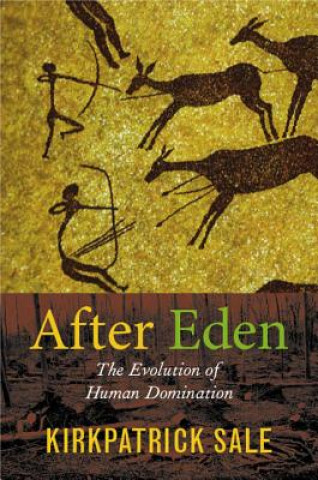
After Eden

The Evolution of Human Domination

Język: Angielski
Oprawa: Miękka
Dostępność: Dostępna u dostawcy
Wysyłamy za 9-15 dni
138.97
When did the human species turn against the planet that we depend on for survival? Human industry an...
Informacje o książce

Język
Angielski
Oprawa
Książka - Miękka
Data wydania
2006
strony
200
EAN
9780822339380
ISBN
0822339382
Enbook ID
04938487
Waga
296
Wymiary
231 x 157 x 13

Pełny opis

When did the human species turn against the planet that we depend on for survival? Human industry and consumption of resources have altered the climate, polluted water and soil, destroyed ecosystems, and rendered many species extinct, vastly increasing the likelihood of an ecological catastrophe. How did humankind come to rule nature to such an extent? To regard the planet's resources and creatures as ours for the taking? To find ourselves on a seemingly relentless path toward ecocide? In "After Eden", Kirkpatrick Sale answers that question in a radically new way. Integrating research in palaeontology, archaeology, and anthropology, he points to the beginning of big-game hunting as the origin of Homo sapiens' estrangement from the natural world. Sale contends that a new recognizably modern human culture based on the hunting of large animals developed in Africa some 70,000 years ago in response to a fierce plunge in worldwide temperature triggered by an enormous volcanic explosion in Asia. Tracing the migration of populations and the development of hunting thousands of years forward in time, he shows that hunting became increasingly adversarial in relation to the environment as people fought over scarce prey during Europe's glacial period between 35,000 and 10,000 years ago. By the end of that era, humans' idea that we were the superior species on the planet, free to exploit other species toward our own ends, was well established. After Eden is a sobering tale, but not one without hope. Sale asserts that Homo erectus, the variation of the hominid species that preceded Homo sapiens and survived for nearly two million years, did not attempt to dominate the environment. He contends that vestiges of this more ecologically sound way of life exist today - in some tribal societies, in the central teachings of Hinduism and Buddhism, and in the core principles of the worldwide environmental movement - offering redemptive possibilities for ourselves and for the planet.
Możesz być zainteresowany

43.94

Becoming Human

Colin Renfrew
239.37
87.60
130.57
222.96

Processes in Human Evolution

CELA-CONDE CAMILO J.
399.93
62.01

Growth

Vaclav Smil
66.79

Energy

Richard Rhodes
71.29

Merchants of Doubt

Naomi Oreskes
65.13

Dinosaurs

Christine Argot
44.53
49.80

Scale

Geoffrey West
59.66

How to Hug

MARYANN MACDONALD
36.81
86.23
174.22

Time Troopers

Christopher Ruocchio
61.23

Klienci, którzy kupili tę książkę, kupili również

10,000 Year Explosion

Gregory Cochran
87.11
57.61
110.64
89.16

Smart Neanderthal

Clive Finlayson
101.46
40.23

History of Humanity

Patrick (University of Pittsburgh) Manning
149.32

Historical Geology

Reed Wicander
825.55

Neanderthal Legacy

Paul A. Mellars
181.55
219.35

Pygmy Hippo Story

Phillip T. Robinson
449.15
34.47
219.93

Long Summer

Brian Fagan
65.13