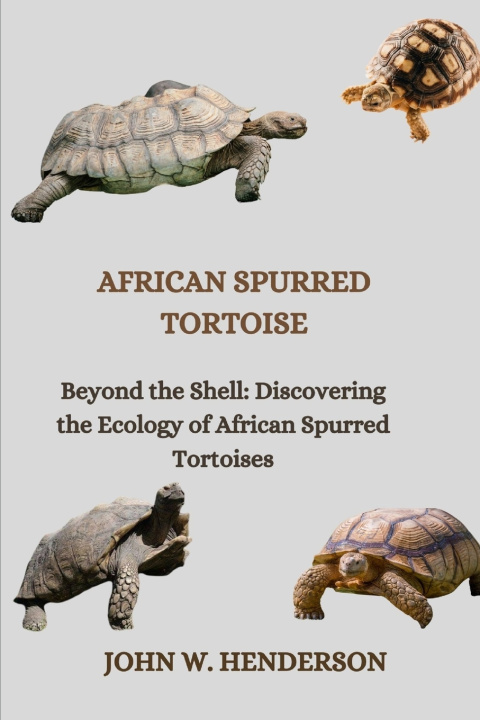
Geographically known as Geochelone , the African Spurred Tortoise is an amazing species of reptile that is indigenous to the dry parts of sub-Saharan Africa. Reptile fans and experts alike have been captivated by this turtle due to its remarkable size, unique look, and intriguing activities. Category and Taxonomy: The African Spurred Tortoise is categorized under the genus Geochelone, which also contains species of tortoises like the Galapagos and leopard tortoises, and it belongs to the family Testudinidae. The deep grooves, or "sulci," that are characteristic of its shell and help with protection and thermoregulation, are what give it its species name . Material Properties: The size of the African Spurred Tortoise is one of its most remarkable characteristics. Adults of one of the biggest kinds of tortoises in the world may grow to a length of up to 30 inches and weigh more than 100 pounds. Their massive, elephantine legs, which bear fierce spurs and sustain their powerful bodies, are the source of their popular moniker. In their desert environments, these spurs are used as tools for excavating tunnels as well as defensive weapons. The African Spurred Tortoise's shell is a wonder of organic design. It is made up of two pieces that are fused together to create a protective shell over the tortoise's internal organs: the plastron, or bottom shell, and the carapace, or top shell. Deep, concentrically organized furrows in the carapace save weight while enhancing structural strength. Residence and Dispersal: The semi-arid grasslands and scrub woodlands of sub-Saharan Africa, which includes Senegal, Mauritania, Mali, Niger, Chad, Sudan, and Ethiopia, are home to the majority of African spurred tortoises. They have evolved well to survive in arid, desert-like conditions with little flora and sharp temperature swings.