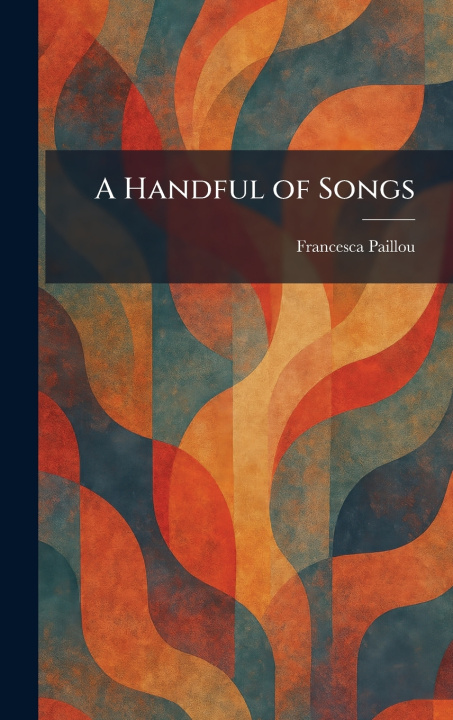
"A Handful of Songs" is a refined collection of lyric poetry that captures the delicate essence of early 20th-century American verse. Written by Francesca Paillou, the work explores themes of introspection, the natural world, and the subtle nuances of human emotion. Through a series of concise and evocative poems, the author demonstrates a mastery of rhythm and sentiment, offering readers a melodic experience through the written word.
The collection is characterized by its brevity and lyrical quality, staying true to its title by presenting a selection of verses that resonate with timeless human experiences. As a work of poetry from 1930, "A Handful of Songs" reflects the stylistic sensibilities of its era, blending traditional structures with a personal, reflective voice. This volume serves as a notable example of female-authored poetry from the interwar period, preserving the voice of a writer dedicated to the delicate craft of the lyric poem. Readers interested in the history of American literature and the evolution of poetic expression will find this collection to be a charming and significant contribution to the era's literary canon.
This work has been selected by scholars as being culturally important, and is part of the knowledge base of civilization as we know it. This work was reproduced from the original artifact, and remains as true to the original work as possible. Therefore, you may see the original copyright references, library stamps (as most of these works have been housed in our most important libraries around the world), and other notations in the work.
This work is in the public domain in the United States of America, and possibly other nations. Within the United States, you may freely copy and distribute this work, as no entity (individual or corporate) has a copyright on the body of the work.
As a reproduction of a historical artifact, this work may contain missing or blurred pages, poor pictures, errant marks, etc. Scholars believe, and we concur, that this work is important enough to be preserved, reproduced, and made generally available to the public. We appreciate your support of the preservation process, and thank you for being an important part of keeping this knowledge alive and relevant.